


Legacy. It means something a little bit different to everyone. Perhaps at its core, legacy speaks to the footprints we leave behind; it speaks to how our actions ripple through the lives of others long after we’re gone. It’s the impact we make, the values we pass on, and the inspiration we spark in those around us. Mary Carlene Mosca was just 13 years old when she passed away; but she left behind a legacy that has fueled the mission of Special Olympics for decades.
Enter Mary Carlene’s older brothers, Stephen and Christopher Mosca. Every winter, no matter where life has taken them, Steve and Chris come together for a tradition rooted in remembrance and purpose. For 14 years, Stephen Mosca has participated in the Polar Plunge. And in a combined effort with his family, he has raised over $60,000 for Special Olympics Massachusetts in honor of Mary Carlene.
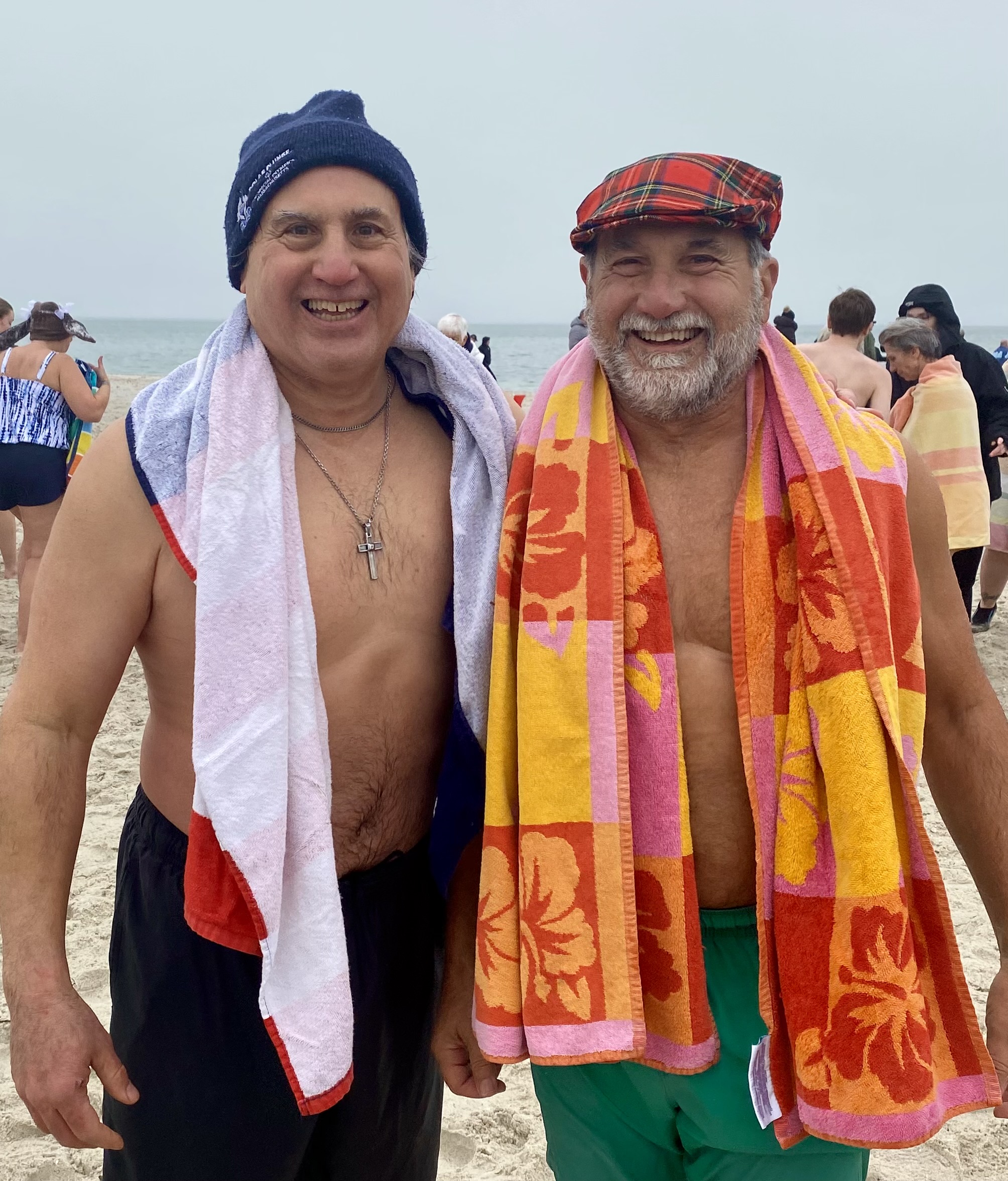
The family grew up in Watertown, Massachusetts, and Mary was the youngest sibling of a close-knit family. Born in 1961 with Down Syndrome, she was thrust into a world not yet built for children like her to thrive. Yet her parents unwavering determination ensured that she would receive an education. Mary's father Antonio was a Watertown School Committeeman, and paired with her mother Nicoletta's fierce advocacy, they refused to let the world’s limitations define what Mary Carlene could achieve.
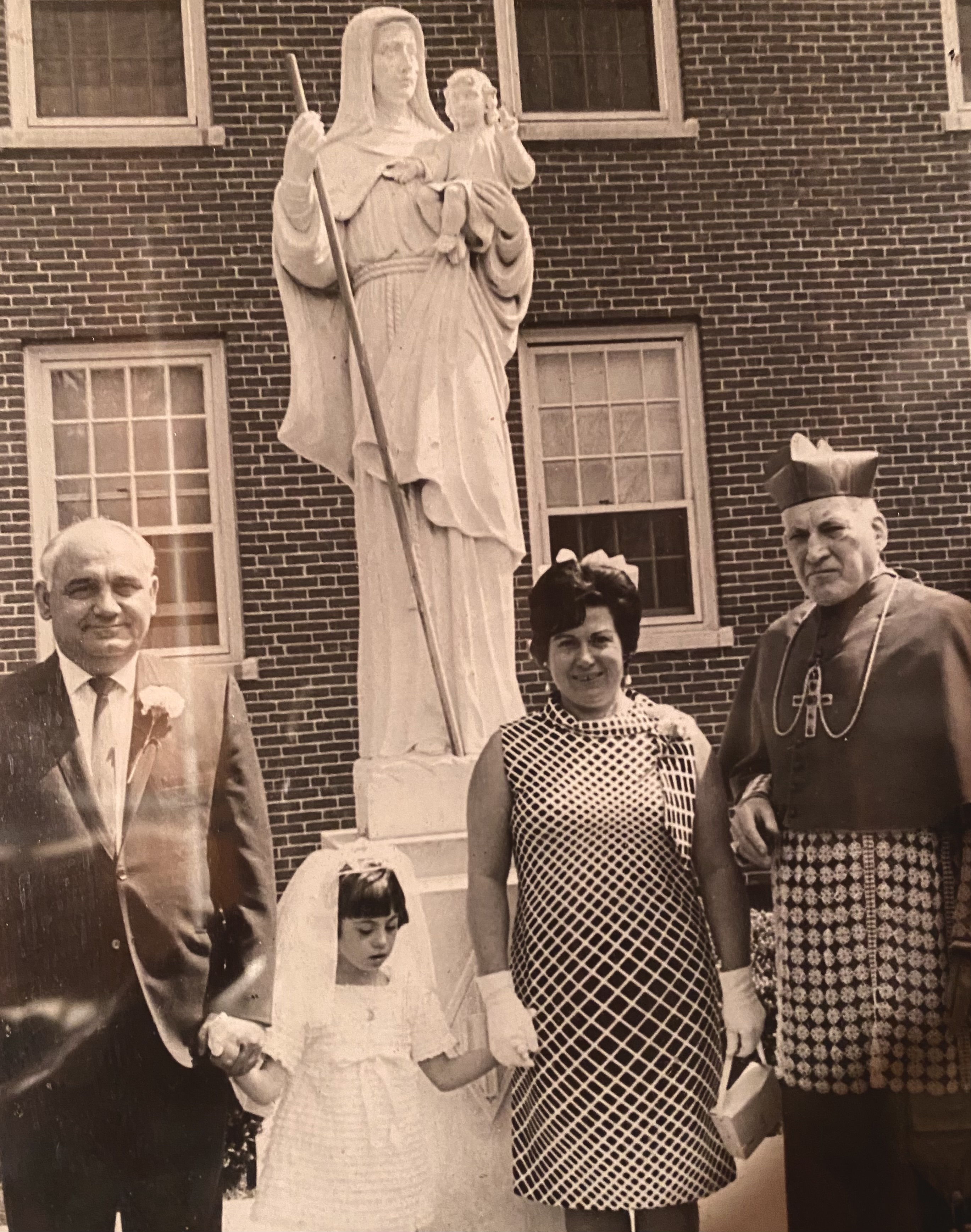
Mary attended St. Coletta’s School (now the Cardinal Cushing School), where she had full access to a supportive and inclusive education.
“And I think you have to understand it in the context of my mother's determination that she would be educated,” said Chris. “Many of those kids were institutionalized at the time. So this was really cutting edge to get her into a school that was supportive and that could educate her.”
But what might be more profound is that it wasn’t just her education that flourished…. It was Mary Carlene who actually taught her community something new as well.
“Not just our immediate family, but cousins, aunts, uncles, neighbors—they all will speak about this—how ironically enough, Mary educated them as a result of her demeanor, her personality, her gift of gab,” said Chris. “So, I think that's part of the legacy. It's not just, well, you accept her and you educate her. It's she educates you into what life truly is all about and how you can overcome difficulty and never lose that optimism.”
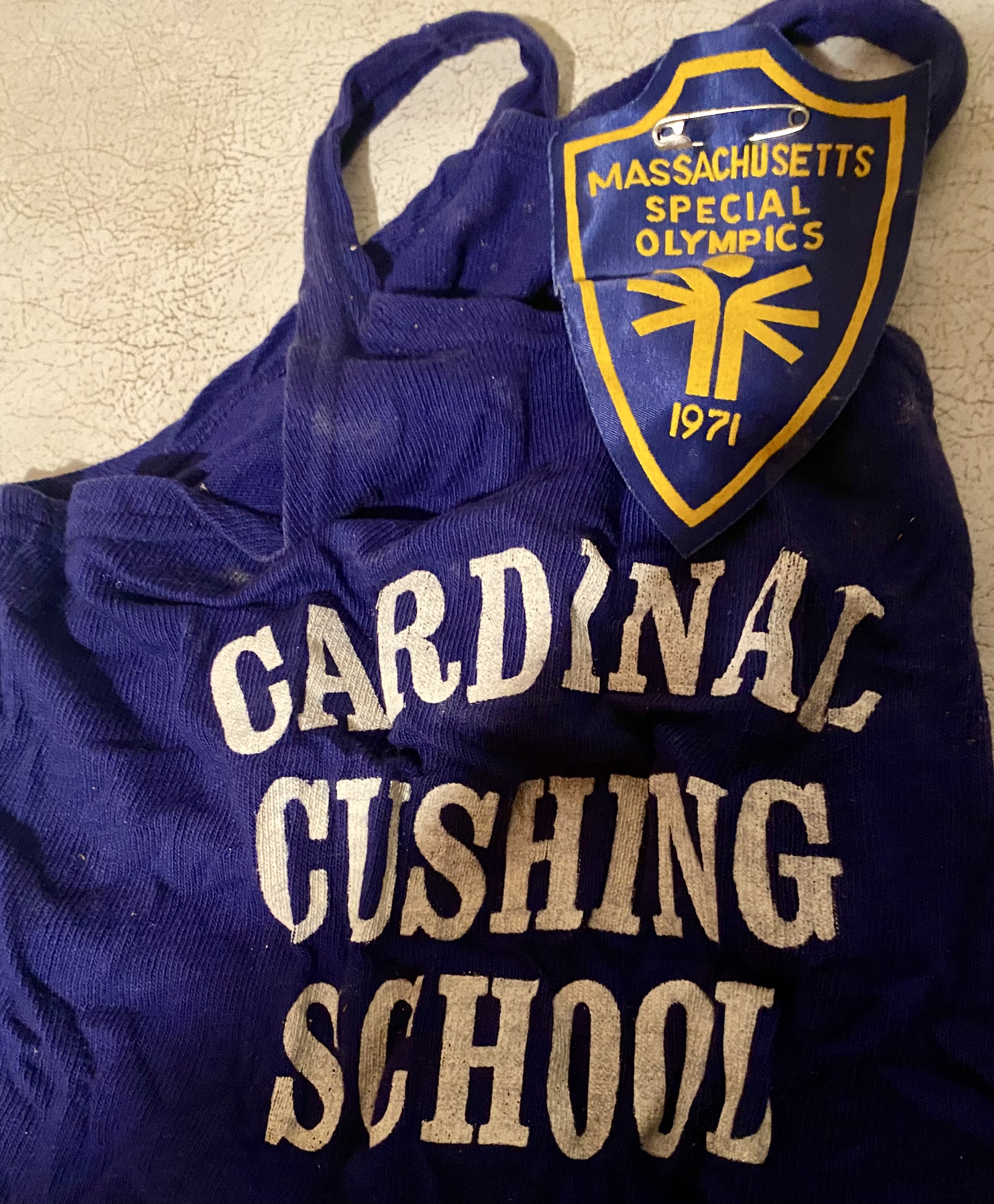
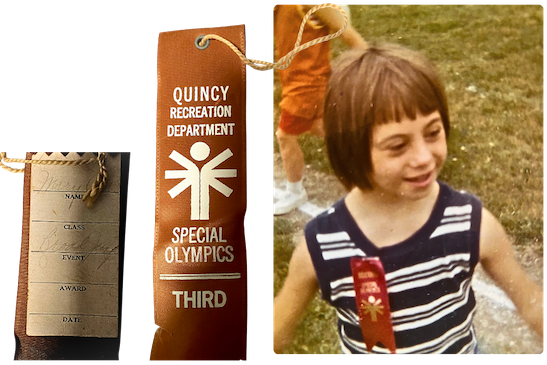
It was at St. Coletta’s School in the early 1970s, that Mary Carlene became one of the earliest participants in what would become the global Special Olympics movement. In 1971, the founding year for Special Olympics Massachusetts, she competed in events like the broad jump, softball throw, and 100-yard dash, earning a third-pace ribbon she cherished.

“The competitions were informal and chaotic by today’s standards at Special Olympics,” said Stephen. “But they were impactful. Athletes were celebrated, cheered on, and recognized simply for showing up and trying.”
For the Mosca family, Special Olympics represented something powerful: dignity, joy, and belonging for people who had too long been excluded. Mary Carlene loved it, and her family never forgot the pride she felt wearing that third-place ribbon.
“The attitude shifts for the athletes. They're able to make a mark in the world and meet a number of people and find a place for themselves. And I think that's key for everybody,” said Stephen.
As it turns out, the Cardinal Cushing School still maintains its deep connection to Special Olympics Massachusetts. It offers competitive teams across year-round sports, along with Young Athletes and recreational opportunities. In an article published by Cardinal Cushing, Mary is remembered as someone who loved dancing in school recitals and modeling in fashion shows. Perhaps that passion and legacy is carried forward in the spirit of the Cardinal Cushing Cheer Team, whose students resemble the likeness and qualities of Mary.
But alongside that joy, Mary faced an incredibly difficult reality. She lived with significant medical challenges and a recurring physical illness that forced both kidneys to be removed. At that time, she was sustained by dialysis until a kidney transplant was performed. Unfortunately, her body suffered complications from the procedure which resulted in re-hospitalization. Though her family knew her time might be short, her passing was still devastating. The loss reshaped the Mosca family, leaving a lasting imprint on Stephen, Chris, and everyone who had come to know her.
Honoring her memory became a lifelong commitment.
That commitment took a new form in 2012, when the Mosca family first took the Plunge. It actually started because Stephen wasn’t appreciating the recent behavior exuded by one of his sons.
“We said, ‘okay, you're going to be unselfish a little bit. Let's do this Polar Plunge together in honor of your Aunt Mary.’ And he had no choice,” said Stephen. “And we both did it. And then we did it again.”
What began as a single Polar Plunge with two family members quickly grew into a full-fledged team. Friends joined. Extended family joined. Spectators became participants. Year after year, the tradition expanded, turning into an annual reunion and a shared act of purpose.
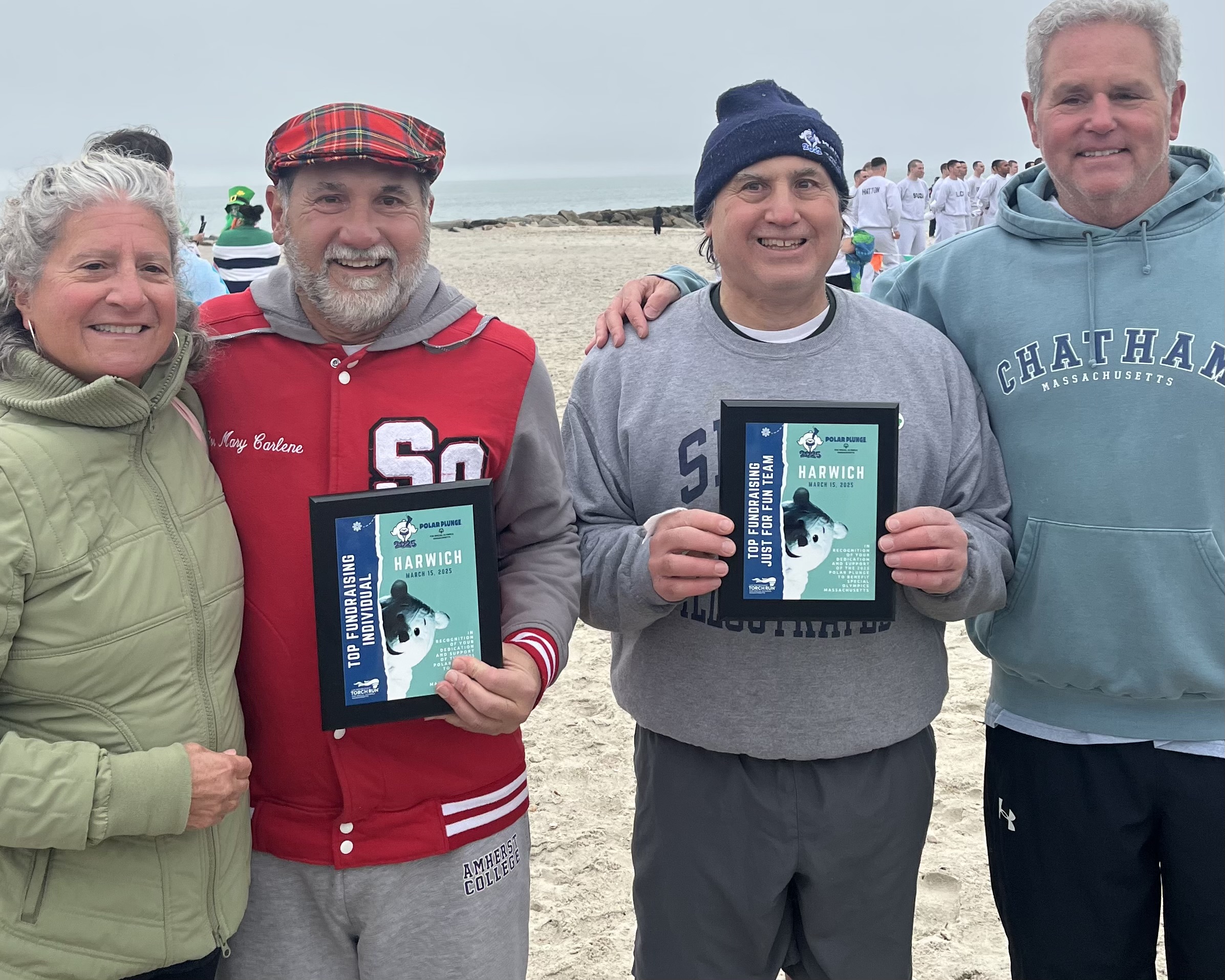
“It’s not a typical fundraising event. It’s more than that,” said Stephen. “It’s a community connected event. It's a great time to get a chance to talk to people you haven’t seen in a while. And, you know, it's just like Christmas every year. And I'm going to keep doing it. It's going to go on for as long as we can, I guess.”
For him, the magic of the Polar Plunge comes from the collective experience—standing shoulder to shoulder with others, rushing into the freezing water, screaming at the top of your lungs.
“There is just something to it. It doesn't take any special talent,” said Stephen. “All it takes is just a willingness to endure a little bit of a cold for a few seconds.”
Today, the Polar Plunge is more than a fundraiser for the Mosca brothers. It’s a celebration. It’s a reminder that inclusion is something you do, not just something you talk about. And it’s a way to ensure Mary Carlene’s legacy continues to ripple outward.
“Mary Carlene was a pioneer,” said Chris. “She walked so others could run.”
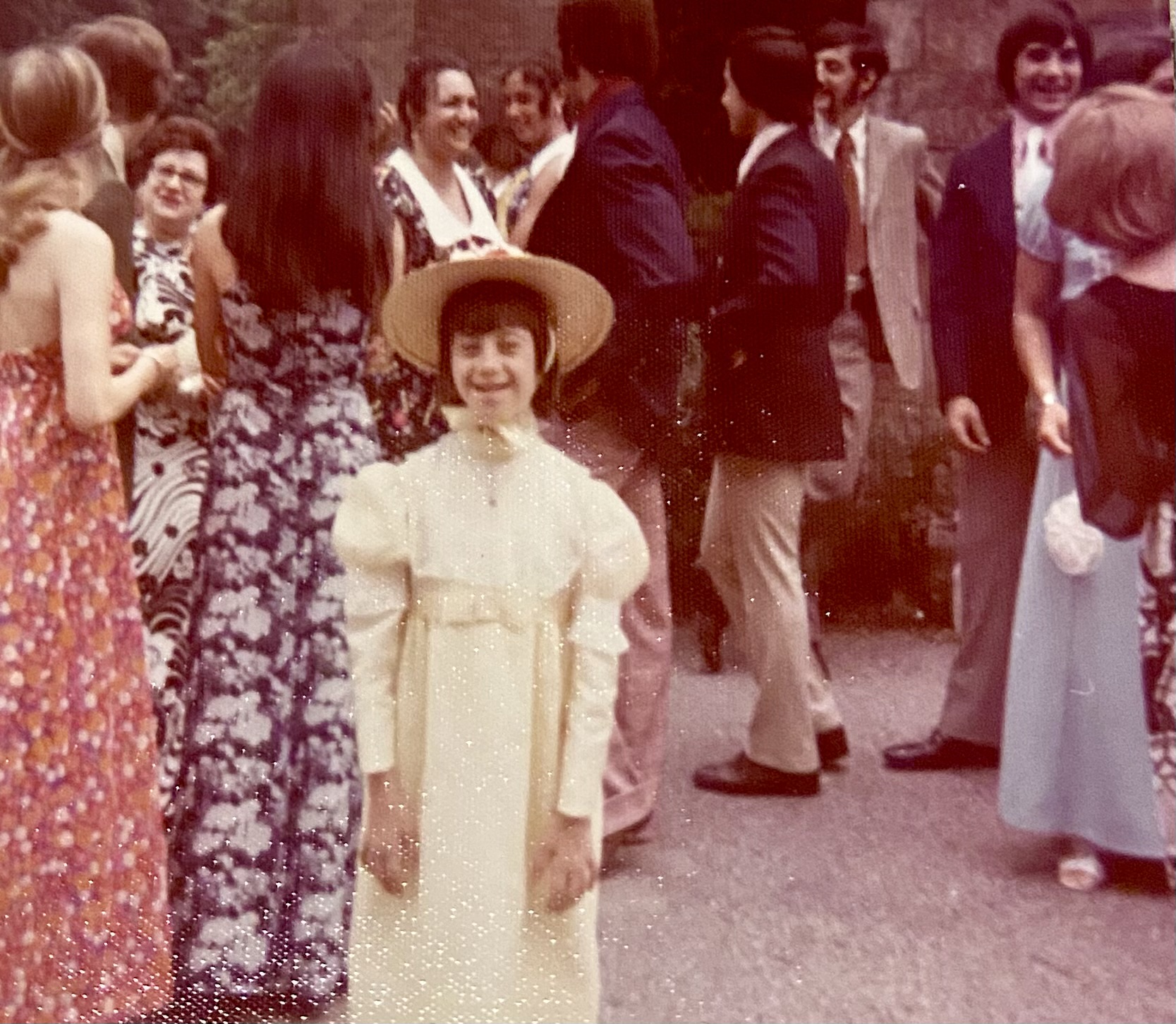
She was one of the first Special Olympics athletes, one of the first children fully included at a time when exclusion was the norm. That’s why Stephen and Chris keep plunging. Why they keep inviting others to join them. Why they’ll continue jumping into icy water year after year.
Because for the Mosca brothers, the Polar Plunge isn’t just about braving the cold; it’s about honoring a little sister who changed their lives, and helping ensure that every athlete, like Mary Carlene, is celebrated for exactly who they are.
.png)
.png)
.png)
.png)
.jpg)


%20logo%20sm.svg)
